- Email helpdesk@brainsbuds.com
- Phone +92 306 3453603

Intellect International Montessori School nurtures young minds with a Montessori-based approach, fostering creativity, independence, and lifelong learning.
Monday to Friday: 7.45am – 1.00pm
Saturday, Sunday: Close
Email: helpdesk@brainsbuds.com
Phone: +92 306 3453603

Everyone is on board as we set sail into the Montessori way of doing things, where interest is the buzzword and learners excel!
Have you ever wondered what would happen if we left children to do as they please? Or how can an inquisitive environment help children become self-reliant, self-confident, and self-dedicated learners?
Montessori is not only a teaching technique, but it is also a lifestyle, even in a small town like Bahawalnagar, where an approach to this education is implemented into practice. In addition to teaching at Intellect International Montessori School, we facilitate the intellectual and emotional development of children, enabling them to control the content and method of their learning.
What are some of the ways through which this philosophy can be helpful in children as they grow?
And now we will see.
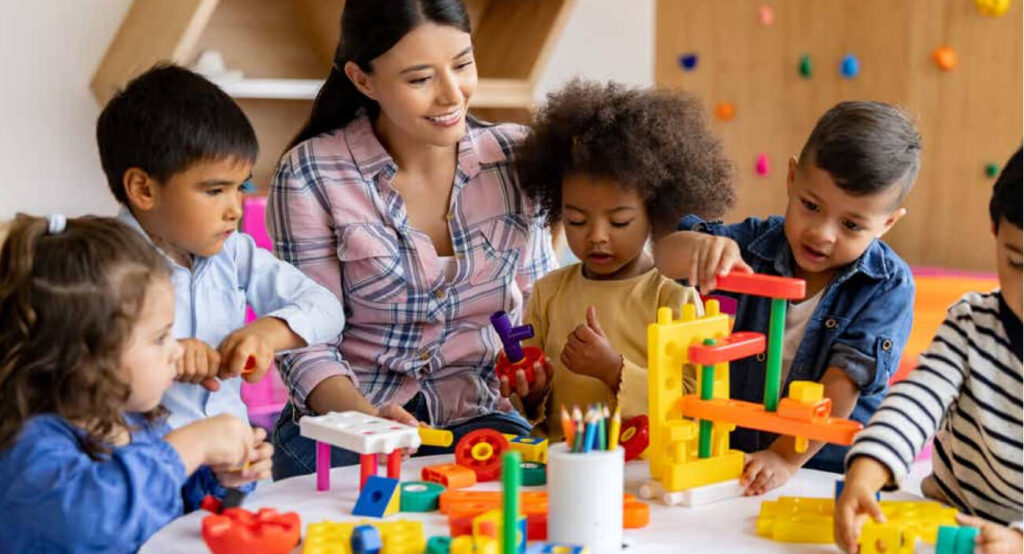
The approach was founded by Dr. Maria Montessori, the first female doctor in Italy, and was based on her observations of children around the world. She realized that a child’s mind is like a sponge, absorbing everything the world teaches. However, why is Montessori different from other teaching styles? The contrast is in its method. Within such a setting, children are responsible for their learning. Education does not occur only in school or through books alone; it is a day-to-day aspect of life. It is a learning event that fosters a love of learning and helps children direct their education. Once this spark is born, it cannot die. This is because the philosophy appreciates the child. It understands that children are eager to learn themselves in a prepared environment. Respect for the child’s growing mind, body, and social life is essential in Montessori.
Intellect International Montessori School follows this philosophy in all its actions. Every child wants to learn. Therefore, we provide them with an optimal learning experience.
We facilitate the natural growth of every child, enabling them to feel happy, confident, and competent.
The goal of all Montessori classrooms is to teach kids to be explorers, to be independent, and to be focused. The materials are organized in a manner that allows children to touch the objects and generate new ideas.
Montessori teachers are keen to pay attention to each child and present learning materials when needed. They also hear what the children prefer to listen to; they observe signs that indicate they require more and then provide extra learning activities accordingly. All children who are left at the art station are recommended to write stories. As a result, the lessons are tailored to respond to the child’s current interests rather than adhering to a particular schedule. They are never written in the sense of always presenting useful tools.
The age groups of children are arranged in three groups. The older ones help the younger people and younger children feel more confident about watching their peers. It enables one to become more open-minded and efficient leaders and team members.
The philosophy is also realistic when dealing with children because they can do what they want to do in a safe structure. Through this balance, children become well-disciplined and respectful while also staying curious and self-directed, as they can complete their activities in a single location (i.e., a mat).
They are trained not to leave their area of work by the use of the fence. As a result, they become aware that discipline matters and that one should not do everything at once. This eventually brings home to them what they can and what they cannot do so that they can relate with others and live up to their responsibilities in life in a decent manner.
It is not ideal when nothing is in order, and by using a mat, you show the child that something has to be in order before creativity and growth are possible. The child can learn to live within limits in their future life when they engage in activities within their area.
The instruments created through scientific construction prompt children to research, examine their mistakes, and discover something new. They help in converting concepts into actions that individuals can carry out, making learning more rational and straightforward. It is created to provide an unprecedented learning mode.
Phonics may be instructed to a child in the sense of touch; sight and hearing of the letters traced with sandpaper and spindle boxes will explain the difference between nothing and number. The value of these materials lies in enabling children to recognize their mistakes and rectify them before it is too late, thereby becoming more powerful and able to think critically.
This style not only teaches children skills but also leaves them curious and self-sufficient in solving life’s problems. The materials also provide them with a chance to explore, practice, and enjoy the required truths, building a concrete basis on which they can create in the future.
Children possess their own style and time of learning. By allowing children to grow and learn at their own pace, Montessori does not impose extra stress or competition pressure on them. Montessori children learn through touch, movement, hearing, and sight. The primary distinction between learning through Montessori education and other forms of learning is that children learn through their hands, senses, and movement rather than being overloaded with facts from books.
Montessori does not use grades or gold stars; children are taught to love learning and take pride in their achievements.

The children will be taught to read and write using sandpaper letters and other movable alphabets based on phonetic principles. You study a language and do not realize that you like it.
Children can explore math by using number rods and golden beads. They learn simple things far, much earlier than they can handle abstract things.
The senses of children can be sharpened through activities that involve using shape, texture, color, and sound to engage their brains more efficiently.
Lacing, giving water, and cleaning will help children learn how to be coordinated, responsible, and confident.
The tools used to teach children about geography and cultures include maps, globes, and nature studies.
Montessori classrooms will help educate students to respect one another, be thoughtful, and resolve conflicts without resorting to them. Children are taught how to express themselves and work together as a team.
The Montessori system is not age-based but rather child-based, meaning that children are guided by their own mental, emotional, and physical maturity. It is aimed at constant development, and therefore, each pupil is challenged and stretched.
Montessori classrooms often feature children dressing up, cooking, and taking care of plants, as these activities are considered practical. They acquire the ability to make decisions and to feel accountable for their choices.
The use of real materials helps with problem-solving. Activities that utilize Montessori materials, such as geometric puzzles, colored beads, and map-building boards, help children learn new things. During math lessons, golden beads are used to help children visualize and experience abstract concepts in knowledge, such as addition or fractions. Working individually will help you become a better reasoner, more creative, and more adaptable to real-life circumstances.
In a class with children of varying ages, they are allowed to encounter the same social challenges that they would face in the real world. Naturally, older children will be the leaders of the younger ones, which will lead to improved leadership skills and increased empathy. As a result, the younger children will grow to be more confident in watching and interacting with them. The activities and group projects involved in conflict resolution help students understand how to be respectful, communicate effectively, and work as a team without being competitive.
Children will pursue their interests, and Montessori learning will become something they love to do and do independently. Children will become interested in learning about dinosaurs, space, or art rather than memorizing facts to pass exams. Because of this motivator, children become more inventive and resilient, and learning is what they love for their entire lives.
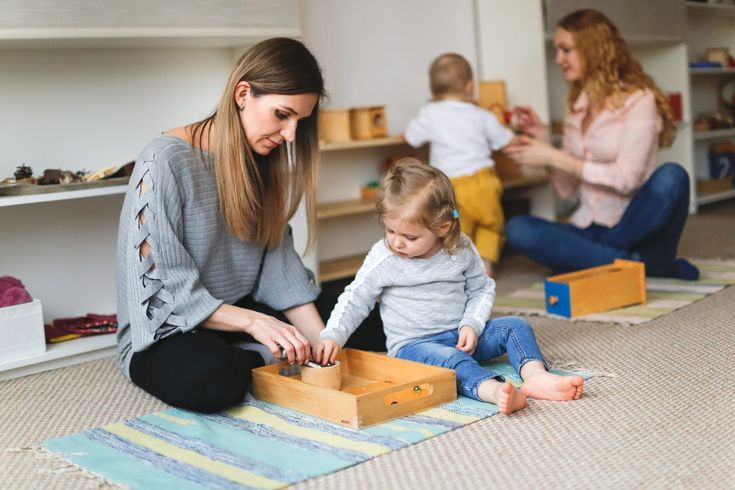
At Intellect International Montessori School, we develop confidence, independence, and a love of learning in our students. Montessori does not only mean teaching, but it is the accomplishment of the self.
Therefore, we are all in the same boat, and together, we can help your child succeed!
Montessori places a strong emphasis on practical learning and learning based on interest, whereas traditional schools tend to focus more on memorization and exams. Montessori teachers are facilitators, not teachers.
2.What is the correct age to bring a child to Montessori?
The most suitable age range is 2.5 to 3 years, as early childhood is the most absorbent time for learning and growth.
Montessori encourages self-discipline through respect, natural consequences, and peaceful conflict resolution rather than through punishment
Yes, Montessori students are easy to adjust since they are independent and focused, and they love learning.
Yes, Montessori is and quite frequently passes academic standards, as core subjects are taught in depth by using real-life materials.
They are also taught about child development, classroom observation, and working with Montessori materials sympathetically and respectfully.
Offer an uninterrupted, structured environment that has age-appropriate, process-manipulative activities that promote independence.
Get all the latest information, support and guidance about the cost of living with kindergarten.
Start Registration