- Email helpdesk@brainsbuds.com
- Phone +92 306 3453603

Intellect International Montessori School nurtures young minds with a Montessori-based approach, fostering creativity, independence, and lifelong learning.
Monday to Friday: 7.45am – 1.00pm
Saturday, Sunday: Close
Email: helpdesk@brainsbuds.com
Phone: +92 306 3453603
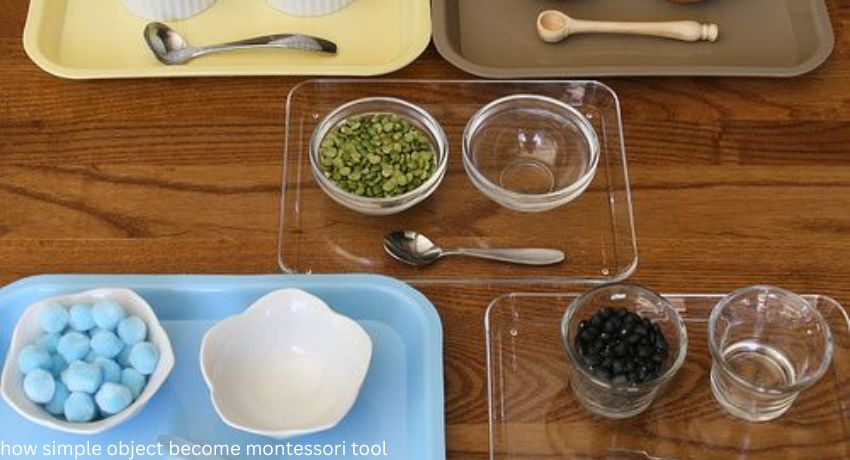
Hi, what is the role played by simple objects in learning? Objects play a crucial role in the learning process since they can enrich a practical experience, represent an abstract concept, trigger curiosity, contribute to the attainment of understanding, and result in the generation of critical thinking. Tactile exploration can help children to develop their fine motor skills and problem-solving through objects. Objects are also used to enable learners to internalize information better because they make abstract concepts more tangible. In Montessori education, specially prepared objects allow children to self-regulate their learning, creativity and cognitive development through interactions with them and building their knowledge of the world. This is a more practical approach which facilitates deeper learning.
At Intellect International Montessori School, Bahawalnagar we believe that learning is an experience. Our Montessori approach uses simple objects as a practical learning tool to allow children to learn and explore through practical life activities, sensorial exploration and object manipulation. In this paper we shall analyse the use of the Montessori method in our school as a whole and interactive learning process using ordinary objects. It is time to get in it!
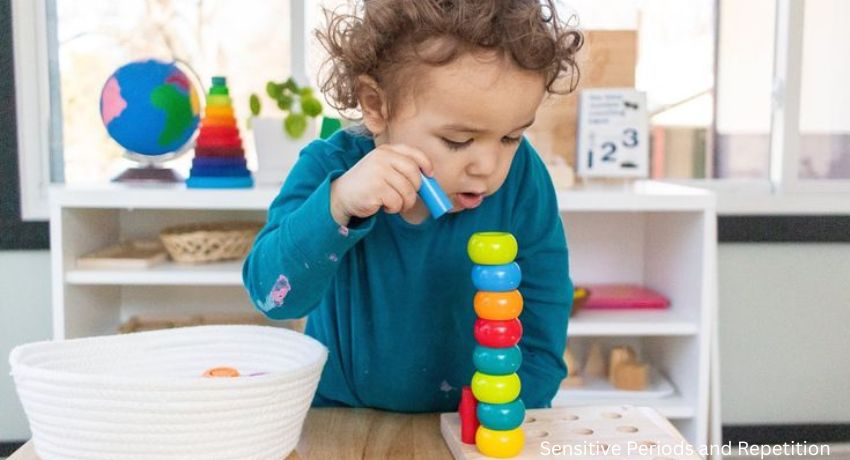
Children learn in various ways by using activities and objects by touching them, smelling, experimenting, imitating, and repeating, and by discovering. The practice will help by developing fine motor skills, coordination of the eyes and the hands, and problem solving skills. The sensory exploration stimulates their senses with an improved perception.
Experimentation also provides the liberty to experiment and make mistakes and imitation and repetition builds muscle memory and confidence. Discovery promotes questioning and doubt. In the Montessori setting, the practices are intentionally established to encourage independence, creativity, and cognitive development as children learn, explore, and develop at their own pace. The Montessori school system uses various forms of specially made materials to promote exploration and discovery through activities carried out using their hands.
These toys are well made to meet the developmental needs of children of various ages to foster independence, imagination and cognitive development. It is through these materials that children get a strong foundation to excel in their further academic activities and learning in their lives.
The Montessori materials are well constructed to ensure that children learn through doing and exploration with the incorporation of some fundamental principles that help children develop in terms of cognitive and motor skills. These materials are also self correcting, in that the child can learn through his or her own errors, as in shape sorters, where a given shape can fit only a given hole.
The other distinguishing feature is the shift between concrete and abstract ideas, i.e. going to numerical symbols after using number rods. Sensorial exploration is encouraged with the use of such materials as texture boxes where children explore different materials with their senses and develop perceptions. The materials are also placed in gradation and sequencing which is more difficult and complex like in the pink tower where the blocks are of a different size.
Finally, activities that emulate real-life activities are promoted, such as pouring cups and spoons, which will help develop independence and fine motor skills. Through these well-designed materials, children acquire important cognitive skills, fine motor skills and problem solving skills that enable them to have a solid foundation to future learning.
At the Intellect International Montessori School, Bahawalnagar we exploit the power of ordinary objects to make them useful learning materials. The Montessori education is practical and self-study oriented. Our school has an expansive variety of Montessori materials and activities which promote children learning through discovery, exploration and experimentation by way of practical life activities, sensorial exploration, and object manipulation
Wooden blocks form one of the fundamental materials that aid children in developing fine motor skills, hand-eye coordination and problem solving. The ability of stacking and nesting blocks enable kids to be creative and understand space. Montessori material is specifically created to promote the physical touch and exploration. The materials do not have to be advanced, but effective, in simplifying complicated ideas. An example is our toddler program which contains Montessori materials like wooden blocks, shape sorters, and stacking toys to develop fine motor skills and hand-eye coordination. As students move up through our program, they are presented with more complex materials, including sandpaper letters, number rods, etc., to learn more complex skills like reading and mathematics.

Practical life materials help develop fine motor skills and independence, including pouring cups and spoons, transfer spoons. These activities resemble everyday activities, and they teach the child practical skills and to gain self-confidence. These activities will make the children more independent, learn self-help techniques and fine motor skills. Intellect International Montessori School, Bahawalnagar, students practice transferring, pouring, spooning, and other seemingly simple activities that in reality are complicated tasks that need concentration and coordination. These activities are also the foundation of more advanced skills like cooking, cleaning and self-care.
Sensory items including texture boxes, color boxes, and sound cylinder are used to stimulate the senses of a child and build their perception. These objects help children to learn how to distinguish between different textures, colors, and sounds, to hone their senses. Sandpaper letters enable children to learn to read and write using the sense of touch. Children count, add and subtract using the number rods and learn the mathematical concept. The rods are the visual and tactile interpretation of the numbers, and they allow children to comprehend abstract mathematical concepts using the real experience.
The Montessori method cannot be complete without sensorial exploration. Our learners are engaged in activities that attract their senses like arranging objects according to their texture, color or shape. Such activities make kids develop their senses and enhance their perceptions of the surrounding world. An example would be our sensorial materials like sandpaper tablets and color boxes, which aids the child in learning the difference between the many textures and colors.
The shape sorters is another highly required tool that enhances problem solving skills, hand-eye coordination and spatial awareness. Children are also educated on matching shapes and objects, to think critically and analytically. Piling up toys such as blocks made of wood allows a child to master his fine motor skills, hand-eye coordination, and problem-solving. These toys come in various forms and shapes, sizes and colors and encourage children to explore and learn through trial and error. Puzzles are an excellent exercise to practice problem-solving, spatial orientation, and critical thinking. Assembling pieces puts demands on the brains and tenacity of the children. In Intellect International Montessori School, Bahawalnagar, we have students who work on activities where they touch or handle objects, e.g., puzzles, shape sorters and stacking toys. These activities will help the children develop upon their fine motor skills, hand-eye coordination, and problem solving skills.
The Montessori principle of learning through play is one of them. We give our students activities that are fun but also learning (i.e., playing with blocks, building with Legos, and playing imaginatively). Through such activities, the children learn to be creative, solve problems, and socialize.
One of the core values of Montessori system is child-directed learning. At Intellect International Montessori School, Bahawalnagar, we provide children the independence to make their learning their own. Not only do our students have the opportunity to explore, discover and learn, but they also are given the freedom to do so at their own pace with the guidance of our trained teachers. The approach will enable children to be self-motivated, self-directed, and enthusiastic about learning.
The Montessori system employs learning through experience. Our students get involved with practical tasks so that they learn through doing. An example of this is that our students are utilizing science, cooking, and outdoor education programs that will enable them to have a better understanding of the world around them.
The Montessori system needs tactile education The activities our students are involved in are those that attract them to their sense of touch i.e. playing with playdoughs, sand and water. These are activities that can assist children in developing their fine motor skills, hand and eye coordination as well as creativity.
The Montessori classroom is specially prepared environment that invites children to learn and discover on their own. The classroom is also prepared adequately to provide diversity of activities and materials that would suit the different learning styles and interests. Our teachers monitor the children and provide feedback and instructions when need be as they learn.
A crucial part of the Montessori method is the Montessori learning materials. At Intellect International Montessori School, Bahawalnagar, we use a diversity of learning materials that allow us to provide practical learning and exploration. We select carefully the materials to serve the needs of our students and train teachers to work with the material.
The Montessori system has an object-based principle. The activities in which our students engage include manipulating objects, e.g., puzzles, shape sorters, and stacking toys. These types of activities help the children in the process of developing their problem solving abilities, fine motor skills, and hand eye coordination.
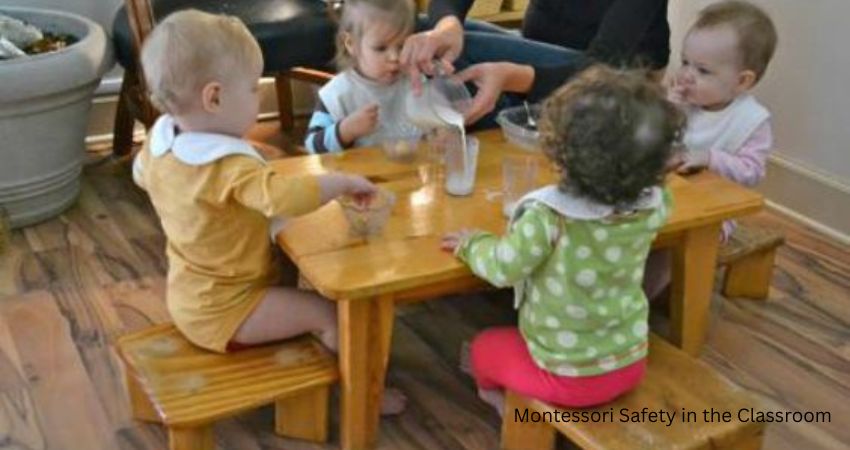
Montessori curriculum has a very important element: developmental activities. The activities in which our students are engaged help them in their development and growth, such as practical life activities, sensorial exploration, and language development. Such activities assist the children in their overall growth and development.
In conclusion, Montessori method is a unique and successful approach to learning, which emphasizes on practical knowledge, self-directed activity and active learning. In Intellect International Montessori School, Bahawalnagar, we make sure that there is a prepared environment that can allow independent learning, creativity, and problem-solving skills. We are assisting our students to learn using simple objects as effective learning tools and in the process gain the skills and confidence they need to be successful in all facets of life. Be it through real life activities, sensorial exploration or handling of objects, our students are on a journey of discovery and growth that will be useful in future.
1.What do objects play in learning?
Objects enable a hands-on experience, represent abstract ideas, evoke a sense of wonder, encourage understanding, and inspire critical thought.
2.What is the role of objects in the Montessori education?
In Montessori education, well-chosen objects are used to promote independent learning, creativity, and cognitive development by means of active interaction.
3.How do objects help in fine motor development in children?
Objects can enhance fine-motor skills in children because they get to touch and feel.
4.Do objects facilitate the explanation of complex things?
Objects can be used to make more complex ideas a reality and easier to understand, helping learners internalize information.
5.How do objects promote critical thinking?
The objects can be used to know how to think critically using experimentation, observation, and analysis.
6.Why is it so important to learn using objects, by hand?
Touching objects helps to learn in a more meaningful way and also builds independent learning, creativity and develops cognitive abilities.
7.What are the Montessori materials in learning?
The Montessori materials are specially created to stimulate the learning process using practical activities and touch exploration and help children develop the basic skills, including reading, math, and fine motor skills.
8.How does Montessori encourage the acquisition of problem solving skills?
Montessori activities such as puzzles, shape sorters, and stacking toys enable children to discover how to problem solve, use fine motor skills, and hand-eye coordination.
Get all the latest information, support and guidance about the cost of living with kindergarten.
Start Registration