- Email helpdesk@brainsbuds.com
- Phone +92 306 3453603
Intellect International Montessori School nurtures young minds with a Montessori-based approach, fostering creativity, independence, and lifelong learning.
Monday to Friday: 7.45am – 1.00pm
Saturday, Sunday: Close
Email: helpdesk@brainsbuds.com
Phone: +92 306 3453603
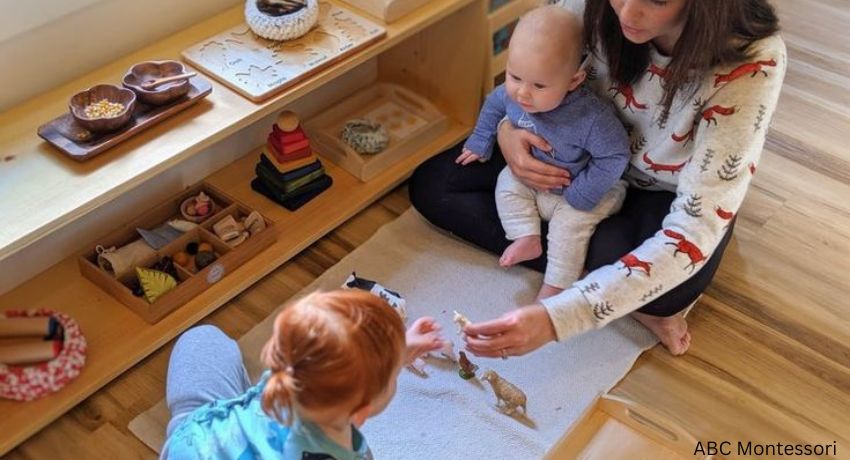
Hello friends! Child-centered education has been based on the Montessori method developed by Dr. Maria Montessori more than 100 years ago. Although its efficacy has been well established, the scientific basis of this approach has gained more and more attention. Neuroscience, cognitive psychology, and educational science research have started shedding light on the mechanisms of the success of Montessori. Research has confirmed that the Montessori approach of self-directed learning, practical activity, and heterogeneous classrooms supports critical thinking, problem-solving, and executive function. The practice of self-directed learning and adaptive learning also correlates with contemporary scientific knowledge of the brain and brain plasticity. With the scientific community still researching the effectiveness of the Montessori approach, an increasing amount of evidence points to the effectiveness of the approach regarding the cognitive, social, and emotional development of children. In this article, we will explore the science behind Montessori education, examining the research that has proven its principles and practices, and providing insight into the cognitive and developmental processes that explain its effectiveness.
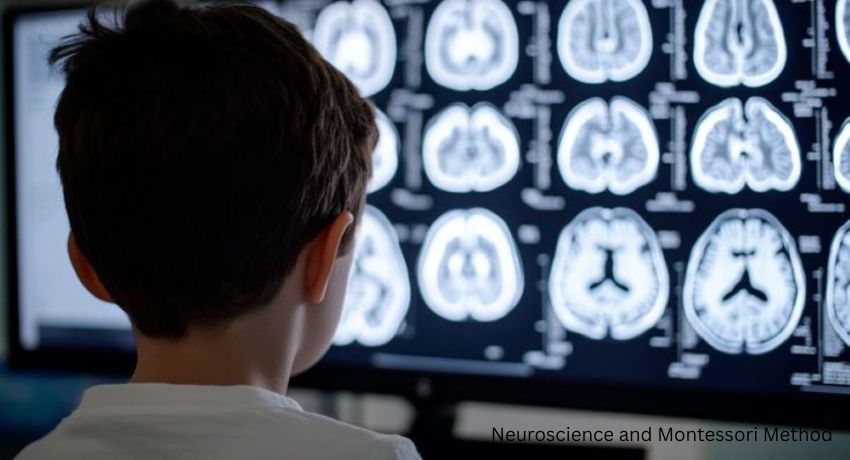
Neuroscience has made significant advancements in the understanding and development of the brain. It has been demonstrated that the Montessori approach of self-directed learning and activity through doing is in line with the normal functioning of the brain. Neuroimaging has proved that practical learning activates the sensorimotor circuits in the brain, which strengthens the cognitive development and increases the learning performance (James & Engelhardt, 2012). The fine motor skills and hand-eye coordination are formed through the practical life activities that the Montessori method emphasizes (pouring, sorting, etc.). These skills form the basis of the academic skills a child will acquire in the future.
The Montessori approach has been based on a thorough knowledge of the Theory of child development and learning. Dr. Experience with children demonstrated that they are naturally curious and eager to be independent, which is why Montessori developed a method that encourages self-directed learning. Child development studies have established the fact that children are active learners and they build their knowledge by exploration and by interaction with the environment (Piaget, 1954). The individualized instruction and adaptive learning that are the focus of the Montessori approach enable children to learn and improve at their own rate, which helps them develop confidence and motivation.
Cognitive development and executive functioning have been areas of great interest in the impacts of the Montessori approach. Researchers have found that Montessori students perform better when compared to traditional students in activities that involve skills of executive functions, including planning, problem-solving, and self-regulation (Lillard & Else-Quest, 2006). These skills are built through the focus on practical life activities and hands-on learning in the Montessori method, which readies children to succeed in their academic life.
The Montessori method includes self-directed learning and practical learning. Studies have established that such strategies have resulted in improved learning, which increases knowledge and retention of information (Thomas & Smith, 2004). The Montessori approach to teaching through the use of specially prepared activities and materials helps the children to learn and explore in their own time and fosters a lifetime love of learning.
Educational psychology has demonstrated that research on the effectiveness of the Montessori method has been immensely valuable. Research has revealed that students of Montessori are more motivated, have higher self-esteem, and social responsibility than traditional students (Dohrmann et al., 2012). The individual approach to teaching and adaptive learning that is the focus of the Montessori method enables the teacher to address the needs and capabilities of each child with a positive and supportive approach to education.
The effects of the Montessori method on brain development and learning outcomes have been a significant research topic. Researchers have found that Montessori students have higher cognitive development, especially in math and reading (Lillard, 2013). The Montessori approach to learning, which involves engaging the mind through the use of hands and practical life tasks, builds the sensorimotor networks of the brain, which are the basis of academic knowledge in the future.
The Montessori method is based on scientifically proven principles. The self-directed learning, practical action, and personalized training focus of the process is consistent with our knowledge of child learning and development. Studies have established that these principles help facilitate cognitive, social, and emotional development among children.

There is increasing evidence-based research that proves the effectiveness of the Montessori method. Researchers have shown that Montessori students achieve better than traditional students do in many academic and social aspects (Dohrmann et al., 2012; Lillard & Else-Quest, 2006). The hands-on learning, self-directed activity, and individualized instruction that the Montessori method focuses on give education a scientific base
Intellect International Montessori School, Bahawalnagar, is one of the schools that proudly adheres to the Montessori philosophy, which is self-directed learning, activity-oriented, and individualized. Our skilled teachers provide a supportive environment where learning is supported cognitively, socially, and emotionally among our students. With the Montessori method in our curriculum, we enable our students to be confident, independent, and lifelong learners.
We are committed to offering a good quality education; therefore, we emphasize practical life activities, sensorial experiences, and academic excellence. We have an excellent basis of Montessori principles, and our students are well equipped to face the world in their forthcoming endeavors and contribute positively to the communities they live in. By aligning our approach with the scientific research behind Montessori education, we will provide our students with a well-rounded education that supports their cognitive and developmental growth, ultimately leading to a better future.
At Intellect International Montessori School, we welcome the Montessori method, which is a child-based learning system that focuses on self-directed education, activity, and individual teaching. Our qualified educators provide a supportive environment that helps our students develop cognitively, socially, and emotionally.
The study of neuroscience has revealed that practical learning activates the sensorimotor networks of the brain, which improves cognitive growth and leads to better understanding. The activities of our practical life, such as pouring and sorting, lead to the development of fine motor skills and hand-eye coordination, and are the basis of later academic skills.
The Montessori program we have will enhance cognitive development and executive functions such as planning, problem-solving, and self-regulation. Through practical activities and real-life learning, we help our students acquire these skills, which will ultimately contribute to their academic success in the future.
We at Intellect International Montessori School believe in instilling ownership in the learning process of our students. The self-directed learning model we use helps our children to learn and explore at their own pace, which instills a lifelong love of learning.

Our teachers have significant experience and focus on the individual needs and talents of the child to offer them individual instruction and adaptive learning. This method will enable our students to move at their own speed, gaining confidence and motivation.
Montessori science unveils a multidimensional and intricate method of learning and development. The principles and practices of the Montessori method have been proven to be effective with the help of the research conducted in the fields of neuroscience, cognitive psychology, and educational science. Understanding how to teach children about their mental and developmental processes, educators and parents can facilitate healthy and enriching learning experiences that enable children to become academically successful and lifelong learners.
Intellect International Montessori School is dedicated to a high-quality education, which is built upon the science of the Montessori education. By understanding the cognitive and developmental processes underlying the Montessori method, we can provide our students with the environment they need to thrive academically and in life
1.What is the correlation between the Montessori method and brain development?
A: The hands-on learning and practical life elements of the Montessori method conform to the natural processes of the brain, so sensorimotor networks are activated and cognitive growth is promoted.
2: What is the effect of the Montessori education on executive function skills?
A: Montessori students have been demonstrated to do better than traditional students in tasks that require executive functions abilities, including planning, problem-solving, and self-regulation.
3: How does self-directed learning in Montessori education help?
A: Montessori self-directed learning encourages a more in-depth comprehension and memorization of material, confidence, and motivation, and develops an interest in education that can last a lifetime.
4: How does Montessori assist individualized teaching?
A: The individualized approach of the Montessori method enables the teachers to take into consideration the needs and capabilities of each child and implement a favorable learning environment.
5: How do Montessori students perform in the long term?
A: Studies have revealed that Montessori students are more motivated, self-esteemed, and socially responsible and perform above traditional students in different academic and social aspects.
6: What is Montessori, and what does it look like at Intellect International Montessori School?
A: The Montessori method is a child-focused educational strategy that focuses on self learning, physical practice, and teaching to the child. At Intellect International Montessori School, we embrace this approach through practical life, sensorial experiences, and academic excellence, creating a nurturing environment that fosters cognitive, social, and emotional growth.
7: What do teachers in Intellect International Montessori School do to facilitate individualised learning?
A: We have qualified teachers who are used to the individual needs and capabilities of the children and offer them specific instructions and flexible learning opportunities. This method will enable students to go at their own pace, gaining confidence and motivation.
Get all the latest information, support and guidance about the cost of living with kindergarten.
Start Registration