- Email helpdesk@brainsbuds.com
- Phone +92 306 3453603
Intellect International Montessori School nurtures young minds with a Montessori-based approach, fostering creativity, independence, and lifelong learning.
Monday to Friday: 7.45am – 1.00pm
Saturday, Sunday: Close
Email: helpdesk@brainsbuds.com
Phone: +92 306 3453603

Hello! Which schooling system performs best among students: Montessori or traditional? There has been a debate in Pakistan over the two schooling methodologies, the Montessori and traditional education. Parents are increasingly searching for Montessori schools near them and the best Montessori schools in the city. The Montessori schooling method is gaining popularity. This article provides a detailed exploration of the main differences between Montessori and traditional education in Pakistan, highlighting the main characteristics, advantages, and limitations of each approach. So, here we go!
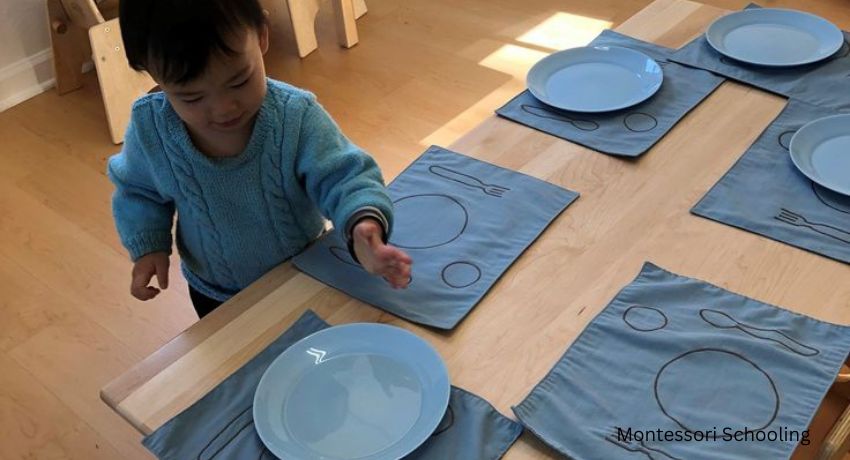
Montessori education is characterized by its child-focused approach, where the education process is tailored to the child’s pace and interests. Independence, critical thinking, and problem-solving are encouraged with hands-on activities, special materials, and self-directed learning experiences. The classroom is well set to facilitate exploration and discovery, where children learn to develop intrinsic motivation and love of learning. The method focuses on functional life skills, socialization, and emotional intelligence, creating the entire child and equipping them to succeed in life.
The Pakistani traditional education, however, is teacher-centered in nature, where the teacher is the center of the delivery of a standard curriculum. It is usually rote-based, requiring students to memorize and reproduce information. Measurement of progress is generally done in the form of frequent checks and tests, and this can make the learning process competitive. Although this method is more structured and provides a foundation for academic excellence, it can be restrictive to creativity, individualized learning, and critical thinking, as students are often required to adhere to a standardized learning pace.
Montessori education is child-focused, emphasizing practical learning, self-driven learning, and personalized teaching. This approach promotes self-reliance, imagination, and analytical thinking, allowing children to learn and work at their own pace. The Montessori classrooms are designed to foster self-motivation, socialization, and emotional intelligence in the whole child. Although it offers a more specialized and comprehensive learning experience, Montessori schooling requires highly skilled teachers and is more costly compared to conventional education.
Conventional education, however, is teacher-centered in nature, and it is characterized by emphasis on standardized curriculum, rote learning, and assessment-driven learning. It is a highly structured environment that offers a sound academic foundation, prepares students for competitive exams, and instills discipline and routine. Nevertheless, conventional education can restrict creativity, uniqueness, and critical thinking because learners are supposed to follow a standard learning speed. Although it offers a clear structure of learning, traditional schooling might not support the various needs and capabilities of all the students, which could result in a gap in knowledge and practice
Montessori schooling offers several advantages, including personal learning, which allows children to learn at their own pace, making them independent and self-driven. The learning by doing and the practical life activities help build up critical thinking, problem solving, and creativity. Montessori learners are likely to fall in love with learning and become inquisitive and self-motivated learners. Moreover, by focusing on socialization and emotional intelligence, children learn to acquire the necessary skills in life, including communication, empathy, and conflict resolution.
Although Montessori schooling is very beneficial, it has its limitations. Among the main challenges is the possibility of lacking structure and accountability, which can overwhelm some children. In addition, the quality of implementation as well as the preparation of the teachers and the knowledge of the parents play a significant role in the effectiveness of Montessori education. Some detractors have criticized Montessori’s focus on independent learning, arguing that it can lead to deficiencies in specific fields of knowledge or socialization. Also, Montessori education may be more costly compared to conventional education, and this may render it unaffordable to certain families.

Conventional education offers several advantages, including a structured setting that fosters discipline and habits, enabling children to develop responsibility and time management skills. The uniform curriculum also exposes students to a broad spectrum of subjects and topics, laying a solid foundation for their future academic work. Competitive exams and evaluation are also offered by traditional schools, which can be helpful for higher studies and career opportunities. Also, the teacher-centered approach is rather guiding and supportive, as it allows students to remain on the right track and meet academic objectives.
But there are also limitations of traditional schooling. The reliance on rote learning and standardized testing leads to a lack of creativity and critical thinking, as students often memorize material without truly understanding or applying it. One-size-fits-all has the potential to ignore individual learning styles and pace, leaving students behind. Moreover, the competitive nature may cause excessive stress and pressure that has adverse effects on the mental health and wellbeing of students. On the whole, even though conventional education offers a good academic background, it might not accommodate the needs and capacities of every student.
Montessori schooling and traditional schooling are different. Montessori is a child-centered learning approach based on practical life skills, independence, and individualized teaching, which involves hands-on learning and self-directed exploration. The method fosters creativity, critical thinking, and problem-solving, equipping students with the skills to become lifelong learners and self-driven individuals.
Conversely, conventional education is teacher-centered, with a standardized curriculum and assessment that focuses on rote learning, discipline, and academic performance to equip students to pass exams, university and vocational education, and employment. Finally, the decision between the two also lies in the need of a particular child, their learning style, and the values of parents
Dr. Maria Montessori developed the Montessori approach, which emphasizes independence, practical learning, and the natural psychological growth of a child. Montessori education has gained a niche in Pakistan and urban centers like BahawaInagar.
Some schools in Pakistan are taking up hybrid models, a combination of Montessori and traditional methodologies. This strategy provides a dynamic and versatile learning experience
Intellect International Montessori School is a hybrid that fuses the most effective elements of Montessori and traditional book-based learning, as well as STEM activities, to ensure a holistic education for children in grades 1 through 5.
Intellect International Montessori School takes a different step through the Montessori method since it focuses on learning through physical activity, and thus children can learn by doing and by experimentation. This approach encourages self-directed learning where students learn at their own pace and can become independent and self-motivated. Another vital aspect is practical life skills, and activities are set to improve self-help, fine motor skills, and general independence.
Along with these Montessori activities, the school has a regular book-based syllabus in Grades 1-5. This systematic program covers the basic subjects, including English, Mathematics, Science, Urdu, Islamiat, Computer, and Social Studies, which enable students to achieve specific learning outcomes. Intellect International Montessori School has a balanced curriculum, a mix of the Montessori system and a traditional syllabus, which takes into consideration the different requirements of the students.
Intellect International Montessori School augments its curriculum with STEM (Science, Technology, Engineering, and Math) activities, which are intended to help students acquire critical problem-solving skills. Such activities help children think logically and apply a methodical approach to the challenges. Creativity and innovation can also be found in STEM education at the school, as students are encouraged to think outside the box and develop new ideas. The school incorporates STEM in its curriculum, so the students obtain a solid background in analytical thinking, and this ensures academic and professional success in the future.
The hybrid model adopted by Intellect International Montessori School offers numerous benefits, providing students with a comprehensive development that encompasses academic, social, emotional, and physical growth. The method provides a balanced education, ensuring students are equipped with the knowledge, skills, and values necessary for future success. Also, the hybrid model enables flexibility and adaptability, which allows students to switch between various styles and approaches to learning easily. The school offers a combination of the Montessori approach, traditional book-based education, and STEM activities to provide a practical and unique learning experience that will help children live and prosper in a world that is rapidly changing.
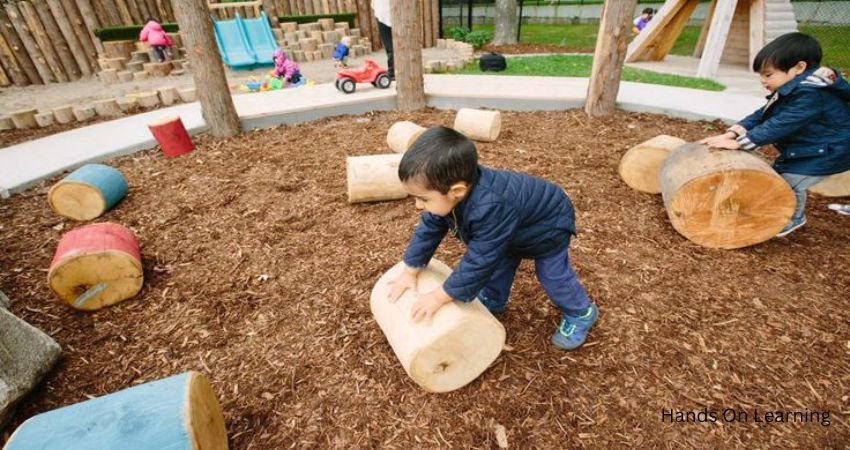
The most critical factors that parents need to consider when searching for the best Montessori schools include teacher qualifications, as the educators must be qualified to teach using the Montessori approach. The learning environment is also essential, and there are real Montessori materials that support practical learning and discovery. Moreover, the parents are to check the curriculum to see whether it is Montessori-based (concentrated on self-directed learning, practical life skills, and individual instruction). Through such factors, parents will be in a position to make an informed choice and select a school that offers a Montessori experience to their child.
Montessori and traditional schooling are the two options available, and they depend on the values and priorities of a family. What community can Montessori and traditional education provide? Montessori education is warm and personal, whereas traditional education is structured and more predictable. The combination of the best of Montessori learning, traditional book-based learning, and STEM activities provides a full-service and successful learning experience that Intellect International Montessori School delivers through its hybrid model. With the inclusion of hands-on learning, self-directed learning, and fundamental real-life skills, the school creates a caring and stimulating atmosphere that facilitates cognitive, social, and emotional growth of every child. The advantages of the hybrid model, such as holistic development, balanced education, flexibility, and adaptability, will help parents choose this model as the best option that can provide their children with an exceptional and efficient educational experience.
Key features of Intellect International Montessori School are Montessori materials, sensorial activities, EPL activities, and a child-centered learning environment.
Montessori teaching is informal, practical, and child-centered, whereas conventional education is formal, pedantic, and book-oriented.
The advantages include being individualized, teaching life skills, fostering intrinsic motivation, enhancing social skills, and promoting sensory development.
These challenges include a shortage of trained teachers, cost factors, parental misunderstandings, and insufficient governmental support.
A: The hybrid model integrates Montessori and conventional book-based learning with STEM activities to offer a holistic education.
A: Montessori method encourages active learning, independent learning, and real-world learning, which creates a sense of independence and self-drive.
A: The Montessori method focuses on practical life skills and self-directed learning, hands-on learning, independence, and cognitive development.
A: Children will gain independence, critical thinking, problem solving, social-emotional development, and be ready to succeed in future academics.
A: The Montessori conceptual-based syllabus is very practical and conceptual-based, as opposed to rote memorization, to facilitate deep learning and understanding.
Get all the latest information, support and guidance about the cost of living with kindergarten.
Start Registration