- Email helpdesk@brainsbuds.com
- Phone +92 306 3453603
Intellect International Montessori School nurtures young minds with a Montessori-based approach, fostering creativity, independence, and lifelong learning.
Monday to Friday: 7.45am – 1.00pm
Saturday, Sunday: Close
Email: helpdesk@brainsbuds.com
Phone: +92 306 3453603

Hello everyone! Pre-schooling is an essential period in a child’s education, setting the stage for their future academic achievements and lifelong learning. At this age, young children are inquisitive, active, and adventurous as they want to explore the world. What is the role of effective teaching methodologies in pre-schooling? In this paper, we will discuss several pre-schooling teaching strategies, their advantages, and best practices.

There are numerous successful teaching methodologies in preschools. We explain each one of them, procedure, principles, scope, importance, strategies, and the abilities required with each:
1. Montessori Method
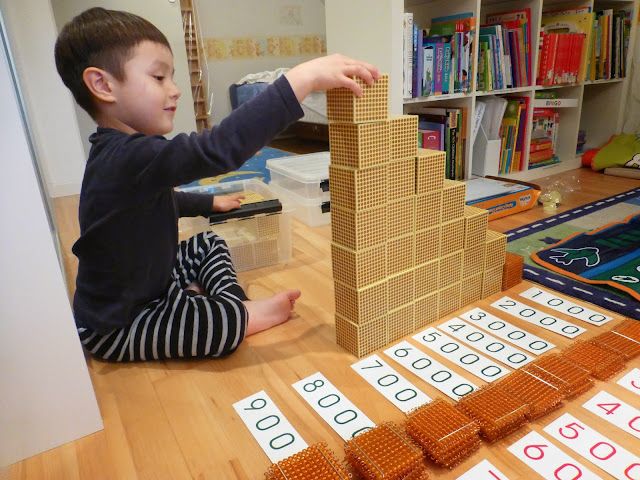
The Montessori system, developed by Dr. Maria Montessori, focuses on self-guided learning and practical activities. This will allow children to learn and explore at their own pace, which would make them more independent, self-motivated, and critical thinkers. Montessori rooms are set up to encourage practical life, sensory understanding, and cognitive learning.
The Montessori approach is a child-based process that encourages self-directed learning and practical activity. In Montessori schools, children are allowed to work on their own, with the teacher playing a more facilitating role. The practice is constructed under the following principles: individualized instruction, heterogeneous classrooms, and children learn at their own pace. The Montessori approach can be used with children aged between 2 and 12 years and is characterized by encouraging independence, self-motivation, and critical thinking. The most important strategies are the application of special Montessori materials, practical life activities, and sensory integration. Effective application of this approach demands that the teacher has been trained in the Montessori approach, as well as in the necessary skills, including patience, flexibility and keen observation.
2. Play-Based Learning
Play-based learning is a strategy that uses the potential of play to encourage learning and development. According to this methodology, play is a natural and necessary factor of childhood when children can explore, experiment and learn with the help of practical experience. Some of the learning activities in a play-based curriculum are role-playing, arts and crafts, music, and movement.
Play based learning uses play as a way of driving learning and growth among young children. This style involves such activities as role-playing, arts and crafts, music, and movement, and the idea is that play is an essential and natural part of childhood. Children learn and discover the world through practical experiences. Play based learning is beneficial among children between the age of 2-8 years, as it supports the cognitive, social, and emotional aspects of development. The strategies that are effective are the provision of open-ended materials and chances of play with the teachers serving as facilitators to the learning process. In order to effectively use play-based learning, a teacher must be able to: design enjoyable activities, monitor the development of children, and guide their learning process in a manner that will encourage their curiosity and creativity.
3. Reggio Emilia Approach
Reggio Emilia approach, which has its origins in Italy, considers children to be capable and competent learners. This approach stresses that children learn best when they are in charge of their learning, which is accomplished by allowing children to learn project-based and through practical activities. The Reggio Emilia approach embraces creativity, inquisitiveness, and social participation.
Reggio Emilia approach is a philosophy of education that focuses on child-driven learning, whereby children learn and discover ideas through project-based learning and activities. This strategy is based on the fact that children are competent and capable of learning and learning is a shared responsibility between children, teachers, and the community. The Reggio Emilia approach is usually used among children of 3-6 years of age and is based on creativity, curiosity, and community engagement. Some of the strategies are project-based learning, practical activities, and involvement of the community in the learning process. Teachers are essential facilitators, creating projects that will challenge children to explore, and developing good relations with children and their parents to form a supportive and stimulating environment.
4. Child-Centered Learning
Child-centered learning gives the child the center stage in the learning process. This method acknowledges the individuality of all children and their interests, strengths, and learning styles. Child-centered learning involves teachers in the role of facilitators whose role is to guide children in their education and exploration at their rate.
Child-centered learning places the child on the center of education where they can learn and explore at their own pace. The role of teachers is to be facilitators who assist children in their own interests, strengths, and learning styles. The method may be used with children of any age and encourages individualized learning, greater engagement, and motivation. Some of the strategies are learning centers, flexible grouping and integration of technology to meet individual needs. Teachers must develop personal learning plans, teach, and establish a close bond with children to build a supportive and inclusive environment where academic growth and development are promoted.
5. Project-Based Learning
Project-based learning is where children engage in real world projects and combine several subjects and skills. This is a method that encourages critical thinking, problem-solving and collaboration, and an increased understanding of complex ideas. Project based learning may involve science projects, art projects, and community service.
Project-based learning is an interactive method in which children are presented with real-life projects that combine several subjects and skills and encourage active and collaborative learning. Hands-on experiences enable children to think critically, solve problems, and work as a team. It is an appropriate method of teaching that can be applied to children between the ages of 5 and 12 years and which encompasses the utilization of real life projects that interlink the different subjects. Teachers also make learning possible because they help the children in their exploration and project work. In order to implement project-based learning successfully, educators should plan valuable projects, moderate the learning process, and evaluate student progress in order to make sure that children will develop the expected learning outcomes.
6. Activity-Based Learning
Activity-based learning is a process of learning that employs activities that are interesting and interactive. This method may involve games, puzzles, and practical experiments, which are aimed at arousing the curiosity of children and their imagination. Activity-based learning is a good method of building cognitive, social and emotional abilities.
Activity based learning is an interactive process of learning which involves interactive activities to facilitate learning and growth in young children. This approach encourages children to use their hands by including practical experiences that arouse their curiosity and creativity, enabling them to learn through exploration. The activity-based learning is age-appropriate and suitable to children between 2-8 years of age, helping them to develop cognitively, socially, and emotionally. Such strategies as games, puzzles, and hands-on experiments that children can be interested in and learning encouraged are effective. Teachers have been instrumental in the design of activities, monitoring the progress of children and supporting the learning process so that every child can take maximum benefit of the experience.
7. Experiential Learning
Experiential learning is the learning where the child learns through trial and error using direct experience and being hands-on. This process encourages critical thinking, problem solving and reflection, and a better understanding of complicated ideas. Field trips, science experiments, and outdoor education are some of the activities that may be considered as part of experiential learning.
Experiential learning is a form of learning that incorporates firsthand experience and practical involvement that allows children to learn by trial and error. This approach is premised on the idea that learning is a dynamic process, in which children acquire knowledge and skills through first hand experience. Experiential learning is applicable to children of all ages and helps to think critically, solve problems, and reflect. Some of the best approaches involve field trips, science experiments, and outdoor education. Teachers are also instrumental in the design of such learning experiences, reflection on what has been learnt and assessment of the student.
8. Holistic Development
Holistic development acknowledges that children grow on a holistic level, which includes cognitive, social, emotional and physical. This philosophy stresses the need to develop a child holistically, giving a balanced education that helps the child to achieve success later in life.
Holistic development is the cultivation of all the areas of a child development, in terms of cognitive, social, emotional, and physical development. The rationale behind this approach is the fact that children grow holistically and all areas of their development are interrelated and affect each other. Holistic development can be used to children of any age as we can identify that each stage of development builds on the other. Holistic education can be used to improve on the developmental needs of the whole individual and thus can produce well-rounded individuals who are able to cope better in different areas of life. It promotes a healthy balance of education where academic success is complimented by social, emotional and physical health.
Pre-School Teaching Best Practices
Excellent preschool instruction is about establishing a caring and positive learning environment that makes children feel safe and free to discover. Teachers facilitate child-directed learning by engaging children in play and practical activities that will lead to cognitive, creative, and critical thinking. There is also a focus on social-emotional learning where children are being educated as empathetic, collaborative, and self-regulated. The curriculum has opportunities in physical activities and outdoor education to enhance growth in general. It is essential to develop good relationships with children, parents, and colleagues, which will form a cooperative and inclusive environment. By adopting these best practices, educators offer quality education that fosters the development of the entire child, which forms a good foundation towards future learning and achievement.

Method by creating a child-centered approach to learning through different practices. Self-directed learning is encouraged in children where they are allowed to determine what to do and at their own pace to foster independence and self-motivation. The school makes use of special Montessori materials to learn with their hands, which reinforces the concepts such as letter recognition and math. Instructors give one-on-one lessons; they differentiate the instructions and adapt them to the needs of the child. Mixed-age classrooms encourage socialization, peer-to-peer learning, and leadership and practical life activities promote fine motor skill development and independence. The never-ending work time enables children to concentrate and develop their ideas and the trained teachers observe and assist them in a caring setting. The school also stresses self-reliance, where children are encouraged to be independent in their needs and in their materials and the school also offers a holistic education, which is that of the cognitive, social, emotional, and physical needs of the child. Based on the ideas of Maria Montessori, the curriculum provides an efficient and well-planned process, that fosters independence, self-motivation, and a desire to continue learning throughout life.
Intellect International Montessori School is a school that provides quality education through an all round learning approach through the combination of the following teaching styles, the Montessori, play based learning, Reggio Emilia, child centered learning, project based learning, activity based learning, experiential learning, and holistic development. The teachers in the school are trained in various methodologies, allowing them to offer an all-rounded education that is based on the needs of different individuals. The curriculum is well planned to accommodate such varied methods, and this way the young children are subjected to a wide educational experience. The school uses various forms of assessment to evaluate students’ progress and understanding, enabling continuous monitoring and providing the support required to allow students to achieve their full potential. It is a multifaceted approach that supports a nurturing and stimulating environment that promotes academic excellence and personal growth.
The inclusive program of Intellect International Montessori School allows students to acquire a set of vital skills, such as critical thinking, problem-solving, and cooperation. The school encourages an interest in learning and academic success through the integration of a variety of teaching practices. In addition to this, its holistic nature facilitates the nurturing of the whole child (cognitive, social, emotional, and physical). This holistic education enables students to become well-balanced individuals with the skills and confidence to thrive in any sphere of life.
Parent and Community Engagement:
Intellect International Montessori School places a high priority on parent involvement and invites parents to become part of the learning process and develop a good partnership between the school and the community. Also, the school encourages community involvement, allowing children to interact with the community. This assists the children in becoming socially responsible, empathetic, and more aware of the world around them, and also establishes meaningful relationships between the community and the school.
School’s Mission:
The mission of Intellect International Montessori School is to provide a high-quality, comprehensive education that helps young children mature and develop, preparing them to succeed later in life. The vision of the school is to build an interactive, fun, and engaging learning environment where children can develop a passion for learning and achieve their potential. The school is committed to achieving academic excellence as well as developing the individual through an inspirational learning environment.
The combination of different teaching methodologies in Intellect International Montessori School makes the learning process very effective and powerful to foster the growth of young children and prepare future achievements.
Combining different instructional strategies, such as Montessori, play-based learning, Reggio Emilia, child-centered learning, project-based learning, activity-based learning, experiential learning, and holistic development, can be an effective way of establishing an all-inclusive and productive learning system in pre-schools. This is how you can combine these methods:
To achieve an effective and dynamic learning environment, the following approach can be taken:
Integrating Montessori and Play-Based Learning: Implement Montessori materials and activities that encourage hands-on learning and independence, and utilize play-based learning activities to allow children to explore and learn through play.
Implementing the Reggio Emilia Ideas: Learn to embrace a child-centered learning environment and project-based learning to encourage creativity, curiosity, and community. Employ open-ended resources and activities so that children can explore and express themselves.
Putting the Child at the Center of Learning: The child should be at the center of the learning process, allowing them to take ownership of it. Employ learning centers, flexible grouping, and technology to facilitate personalized learning.
Integrating Project-Based Learning: Embed projects that are multi-disciplinary and multi-skilled, promoting critical thinking, problem-solving skills, and collaboration. Motivate children to collaborate and present their findings to the whole classroom.
Incorporating Activity-based Learning: Utilize interactive and engaging activities to facilitate learning and growth. Include games, puzzles, and practical experiments that will arouse curiosity and creativity.
Focus on Experiential Learning: Utilize direct experience and hands-on activities to enable children to learn through trial and error. Include field trips, science experiments, and outdoor education to foster critical thinking and problem-solving.
Emphasize Holistic Development: Develop all aspects of a child, including cognitive, social, emotional, and physical. Include actions that encourage social-emotional learning, physical activity, and creativity.
This combined method has many advantages, such as a well-rounded learning experience that gives the student a global perspective, developing skills that will improve critical thinking, problem-solving, and teamwork, a love of learning that leads to academic success and motivation, and a holistic development that nurtures cognitive, social, emotional, and physical development. To achieve this strategy, teaching staff should be provided with a variety of methods during teacher training. The curriculum should also be offered with a variety of techniques, and assessment tools should be used to assess progress. Additionally, parents and the community should be encouraged to support learning. Combining these approaches, one can develop an active and efficient learning experience that will precondition further achievements.
In summary, pre-schooling teaching methodologies are numerous and varied, each with its own respective principles and advantages. How do the teachers instill the spirit of lifelong learning in preschoolers? This is possible through the adoption of best practices in pre-school teaching, thereby enabling young children to acquire the skills, knowledge, and confidence they require to succeed in a rapidly changing world. The final objective of pre-school education is to ensure that children develop a love of learning that will last them throughout their lives. By applying these learning methodologies, educators can help children reach their full potential.
FAQs
1.What is the significance of early childhood education?
Early childhood education plays a vital, crucial role in laying the groundwork for future success in school and beyond. It aids children in acquiring cognitive, social, emotional, and physical skills that are vital in lifelong learning.
2.What are the teaching methodologies that benefit the development of children?
Various methodologies of teaching assist the children in different ways. An example is that Montessori focuses on independence and self-directed learning, whereas play-based learning is focused on exploration and discovery.
3.How does child-centered learning benefit?
Child-centered learning facilitates individualized learning and interest. It enables the children to own the learning process and grow at their own speed.
4.What are the best practices that can be integrated into the preschool teaching?
Educators can apply best practices in pre-school teaching by establishing a positive and encouraging learning atmosphere, using teaching strategies, and giving children a chance to acquire their skills and knowledge.
5.What can parents do to assist the preschool education of their child?
Parents can contribute to their child’s preschool learning by creating a nurturing home atmosphere, communicating frequently with their child’s teachers, and encouraging their child’s curiosity and interest in learning.
6.What is the Montessori method?
The Montessori method is a child-centered approach to education developed by Maria Montessori that involves activities that are self-correcting, self-contained, and hands-on, and a form of individualized instruction.
7.How does the Montessori approach help children with various learning styles?
The Montessori approach accommodates children of varied learning abilities by offering one-on-one learning, practical tasks, and a self-directed learning process.
8.Does the Montessori method fit all children?
The Montessori approach may be helpful to most children, but not all children. Parents need to conduct research and visit Montessori schools to decide whether the approach is suitable for their child.
9.What are the long-term advantages of a Montessori education?
A Montessori education has long-term benefits, including the development of independence, self-motivation, and critical thinking abilities, as well as a solid academic foundation for the future.
10.More on the Montessori method and Intellect International Montessori School?
To gain further information about the Montessori approach and Intellect International Montessori School, you can visit the school’s website, attend an open house, or make an appointment with the administrators of the school.
.
Get all the latest information, support and guidance about the cost of living with kindergarten.
Start Registration